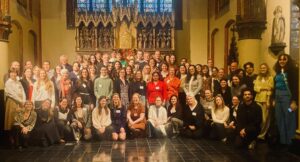

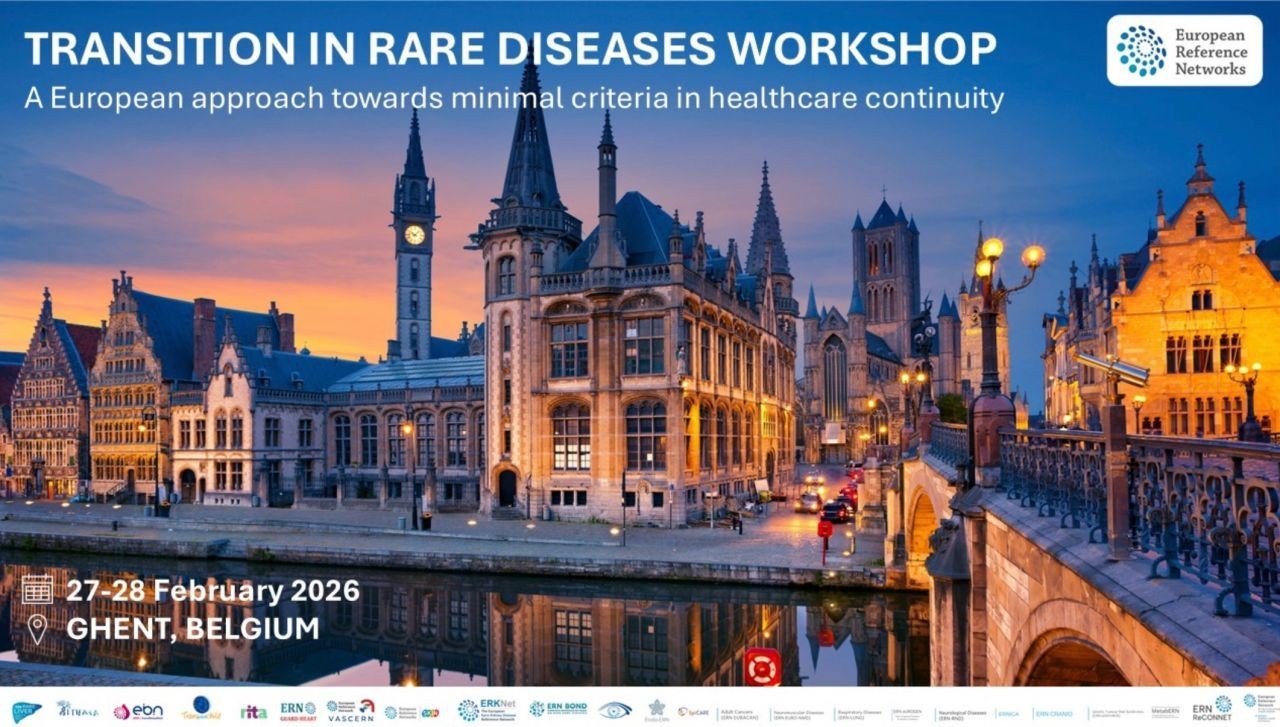
Two weeks ago, representatives from 22 European Reference Networks (ERNs) gathered in Ghent, Belgium, for the first ERN-wide workshop dedicated to healthcare transition in rare diseases.
Over two days, healthcare professionals, young patient representatives and ERN experts worked side by side to address an important question: What practical and actionable solutions could help ensure continuity of care when young people with rare diseases move from paediatric to adult services?
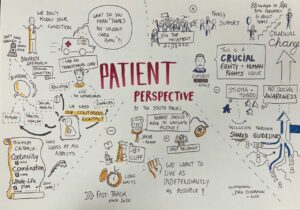
Rare diseases are often seen as a “children’s issue”, as the majority of known rare conditions start in childhood. As children receiving care from paediatric teams grow into adolescents and young adults, preparing for and navigating the transition to adult services is not always smooth. In fact, many young patients refer to this phase as the “18+ cliff”, a moment often characterised by limited preparation for transition, fragmented access to services, and insufficient coordination between specialists and care structures.
The workshop created a space for open discussion and practical work. Together, participants:
• explored the main challenges and opportunities for transition care across Europe
• discussed ways to improve coordination between paediatric and adult services
• worked on practical recommendations and minimum standards of care for transition in rare diseases
• identified tools and frameworks that could support more equitable and structured transition pathways.
One of the highlights of the event was a session where three members of the cross-ERN Youth Panel shared their personal experiences of transition, reflecting on what worked well and what did not. Hearing directly from young people living with rare diseases helped anchor the discussions in lived experience. Their testimonies reminded everyone that transition is not only a medical process, but also a personal journey towards independence and self-management.
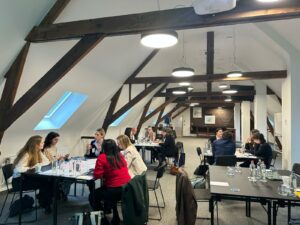
EURO-NMD was proud to be represented by Teresinha Evangelista, Houda Ali, Charlotte Handlberg and Jakub Gietka, whose participation helped bring the neuromuscular community’s perspective to the discussions.
This workshop also strongly connects with the work of the EURO-NMD Transition Task Force, which recently published the results of a survey exploring transition practices for neuromuscular diseases across Europe. The next step will be to continue this work and move towards expert consensus recommendations for transition of care in neuromuscular diseases.
Thank you to the ERN Overarching Transition Working Group coordinated by ERN RARE-LIVER, for creating such a thoughtful and collaborative event made even more meaningful as it took place during Rare Disease Day.