

Welcome to the EURO-NMD Academy: Where Neuromuscular Disorders Education is Revolutionized! Our cutting-edge platform, powered by the renowned Moodle Learning Management System (LMS), empowers you to stay ahead in your practice. Designed by leading experts, our immersive online courses are perfect for medical professionals, students, and researchers looking to enhance their knowledge and skills. At EURO-NMD Academy, we offer expert-led courses to provide in-depth insights and the latest advancements in diagnosing and treating neuromuscular disorders. Led by world-renowned specialists, our curriculum is carefully crafted to keep you at the forefront of this ever-evolving field. Choose EURO-NMD Academy for unparalleled education, and stay ahead in your practice today!
What is the EURO-NMD Academy’s target audience?
The EURO-NMD Academy delivers courses that are addressed to healthcare graduates, including post-graduate medical students and medical residents, general practitioners and different medical specialities and healthcare professionals (adult and children neurologists, neuro-myologists, neuro-imaging specialists, epileptologists, paediatrics, internal medicine specialists, ophthalmologists, geneticists, nurses, dieticians, pharmacists, biologists, biochemists and rehabilitation specialists).
How do I enrol in EURO-NMD Academy’s courses?
In order to enrol in the courses, you need to gain access to the EURO-NMD Academy platform by creating a new account (https://euronmd.lilicampus.com/)
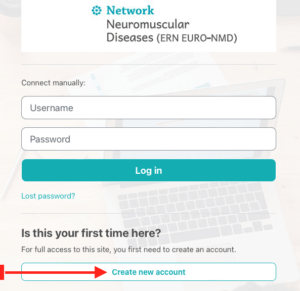
After creating a new account, please enrol in the Courses available on EURO-NMD Academy, currently the Mitochondrial Disorders Course:
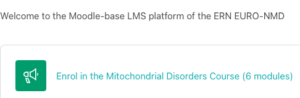
Mitochondrial Disorders Course
The Mitochondrial Disorders ERN EURO-NMD Academy Course, made available on https://euronmd.lilicampus.com and organized by ERN EURO-NMD European Reference Network for Rare Neuromuscular Diseases, is accredited by the European Accreditation Council for Continuing Medical Education (EACCME®) to provide CME activity for medical specialists.
Introducing the Mitochondrial Disorders Course
The Mitochondrial Disorders Course is a joint initiative of the European Reference Networks EURO-NMD (Rare Neuromuscular Disorders), ERN-RND (Rare Neurological Disorders), and ERN EpiCARE (Rare and Complex Epilepsies). The Course comprises eleven modules and was developed to address a recognised gap in postgraduate education on mitochondrial disorders.
This educational gap largely reflects the intrinsic complexity of mitochondrial diseases and the multidisciplinary nature of their clinical manifestations and management. As a result, education in this field is often fragmented across medical specialties, limiting a comprehensive understanding of their multisystem involvement. This fragmentation highlights the need for a holistic, integrated approach to patient care.
The Course brings together expertise from different neurological and neuromuscular disciplines to provide a unified framework for understanding and managing the neurological presentations of mitochondrial disorders. It integrates recent advances in diagnosis, pathophysiology, and treatment, with particular attention to areas where specialised knowledge remains insufficiently disseminated.
A clear example is the recent consensus on the management of mitochondrial epilepsies, a field in which disease-specific therapeutic considerations are still not widely recognised by many healthcare professionals. These and other identified knowledge gaps are explicitly addressed within the Course curriculum and are embedded in its evaluation framework, allowing documentation of learning outcomes and ensuring that participants achieve the intended educational objectives.
Mitochondrial Disorders Course Faculty
This Course was developed with the active collaboration and support of a diverse faculty from the 3 ERNs involved (EURO-NMD, ERN-RND and Epicare)
The members of the Mitochondrial Disorders Course Faculty, in alphabetical order, are:
Caterina Garone
Chiara La Morgia
Cornelia Kornblum
May Yung Tiet
Michelangelo Mancuso
Mika Martikainen
Patrick Yu-Wai-Man
Rita Horvath
Serenella Servidei
Valerio Carelli
Mitochondrial Disorders Course Learning Objectives
General Course Objectives
- Develop a comprehensive understanding of mitochondrial disorders’ genetics, pathophysiology, and clinical manifestations.
- Critically evaluate current and emerging diagnostic methods and treatment strategies for mitochondrial disorders.
- Apply knowledge of mitochondrial disorders to case studies, highlighting the multidisciplinary approach needed for effective management.
- Provide information about ongoing research and future directions in the study of mitochondrial disorders.
Introduction to Adult Mitochondrial Disorders
- Understand the basic structure and function of mitochondria in human cells.
- Identify the common mitochondrial disorders affecting adults, including their genetic origins.
- Recognise the clinical manifestations and diagnostic criteria for adult mitochondrial disorders.
- Analyse the impact of mitochondrial disorders on adult health, including prognosis and quality of life.
Childhood Mitochondrial Disorders
- Learn about the diagnostic challenges of Leigh’s disease and the precise therapeutic needs.
- Learn about clinical, imaging, biochemical and molecular features of childhood mitochondrial disorders
- Familiarise with diagnostic-support platforms and how they assist precision-medicine diagnosis and the therapeutics for mitochondrial diseases
Acute Onset in Infantile Mitochondrial Disorders
- Learn about the onset and presentation of acute mitochondrial disorders in infancy.
- Distinguish between the main clinical scenarios of metabolic acidosis, isolated or in association with a specific organ failure (heart, liver, kidney) or CNS involvement.
- Follow the gene case vignettes: BCS1L, MTO1 and ELAC2
- Explore other genes and syndromes also involved in this context: Leigh Syndrome, Alper Syndrome,
- DGUOK-related mtDNA depletion syndrome, FARS2 Defect, Pearson Syndrome and ATP6/8 Defects.
Pregnancy in Primary Mitochondrial Diseases
- This module status contains updates covering genetics, counselling, maternal–fetal risks, clinical management, the current evidence base, and collaboration needs.
- You will learn about counselling principles when mtDNA is concerned, including the importance of early planning when considering reproductive options that avoid transmission, consideration of heteroplasmy across multiple family members to determine family transmission patterns, and understanding tissue-specific heteroplasmy.
- You learn about prenatal diagnosis methods and their limitations, pre-implantation genetic diagnosis and mitochondrial replacement therapy.
Mitochondrial Epilepsies
- Define mitochondrial epilepsies and their pathophysiological basis.
- Differentiate between mitochondrial epilepsies and other forms of epilepsy based on clinical features and diagnostic tests.
- Review the management and treatment strategies for mitochondrial epilepsies.
- Assess the latest research findings and their implications for clinical practice.
Mitochondrial Movement Disorders
- Explain the role of mitochondria in muscle and nerve function related to movement.
- Identify specific mitochondrial movement disorders and highlight their clinical features and pathogenesis.
- Discuss diagnostic approaches, including genetic testing and muscle biopsy findings.
- Evaluate current and emerging therapies aimed at managing symptoms and improving mobility.
Primary Mitochondrial Myopathies
- Define primary mitochondrial myopathies and their relationship with other mitochondrial disorders.
- Analyze the clinical presentation, including muscle weakness and exercise intolerance, and how these impact patient activities of daily living.
- Discuss diagnostic approaches, including genetic testing and muscle biopsy findings.
- Explore the latest treatment options and supportive care strategies to enhance patient quality of life.
Mitochondrial Optic Neuropathies
- Understand the clinical relevance of mitochondrial optic neuropathies across the lifespan, as these conditions affect both pediatric and adult populations, underscoring the importance of early recognition and multidisciplinary management.
- Address the Genetic and Phenotypic Heterogeneity of MONs, as both mitochondrial DNA and nuclear DNA defects contribute to disease, leading to variable presentations ranging from isolated optic atrophy to multisystemic syndromes.
- Promote the integration of Molecular Genetics and Clinical Neurology, as understanding mitochondrial optic neuropathies requires a multidisciplinary approach that bridges molecular genetics, mitochondrial biology, and clinical neurology.
Therapies for Inherited Optic Neuropathies – an Update
- This module guides you through the current therapeutic landscape — from established supportive measures to cutting-edge gene replacement and neuroprotective strategies — and shares insights into the challenges and opportunities that lie ahead in bringing these advances to patients.
- You will learn about cutting-edge treatments for LHON, including Idebenone, iPSC/Retinal Ganglion Cell Models, and RNA, ASO, and gene correction approaches currently under development.
MELAS and MELAS spectrum clinical findings and therapeutic options
- This module will teach you the diagnostic criteria of MELAS syndrome
- You will learn the imaging characteristics and their differential diagnosis
- You will be able to connect the genetic aspects to the heterogeneity and multisystemic features of the condition
- You will be able to choose the appropriate treatment for acute episodes, seizure control, management of lactic acidosis, cardiovascular, respiratory, metabolic and gastroenterological features.
Cell models and innovative therapies in mitochondrial disorders
- This module guides you through the current state of the field, linking mitochondrial genetics, pathophysiology, and modelling approaches to the evolving landscape of translational therapy development. We will explore how insights from diverse model systems inform drug repurposing pipelines, small-molecule discovery, and emerging gene therapy and genome editing approaches. Along the way, we will discuss critical gaps, technical challenges, and the next steps needed to translate these advances into tangible clinical benefits for patients living with mitochondrial disorders.
Mitochondrial Disorders Course Workload
The learners will need to read the proposed readings in preparation for a 1-hour webinar featuring a presentation of around 50 minutes, followed by a 10-minute Q&A. The module’s final questionnaire will assess the overall scope of knowledge collected from the suggested readings and the webinar content. Questions are oriented toward a practical approach to the management of these conditions to optimise patients’ results. The module will take the participant an average of 2-3 hours to complete, depending on their previous familiarity with the subject. A total investment of around 20 hours will be required to successfully complete all eleven modules.
Target Audience
This course is addressed to courses that are addressed to healthcare graduates, including post-graduate medical students and medical residents, general practitioners and different medical specialities and healthcare professionals (adult and children neurologists, neuro-myologists, neuro-imaging specialists, epileptologists, paediatrics, internal medicine specialists, ophthalmologists, geneticists, nurses, dieticians, pharmacists, biologists, biochemists and rehabilitation specialists).
Enrolment
- Start by gaining access to the EURO-NMD Academy. Go to euronmd.lilicampus.com. Once on the login page, create an account by clicking the bottom right button “create a new account” (see picture above)
- Once you have an account, the Home webpage will show you the enrolment tool (see picture above)
- Fill out the corresponding form, and we will get back to you with confirmation of your enrolment
- You are set to go: sit all modules. Use your own pace and access from any device.
Assessment
Learners should complete a 4-question questionnaire for each module (11 modules) and achieve an approval rate of 75% (11 out 15 questions. Multiple trials are allowed for each module, and learners can follow whichever order suits them best. This evaluation validates the learning objectives established for this course and allows certification of the educational activity.
Participants Feedback
At the end of each module, participants are invited to provide feedback regarding its contents.
Certification
The Mitochondrial Disorders ERN EURO-NMD Academy Course, made available on https://euronmd.lilicampus.com and organised by ERN EURO-NMD European Reference Network for Rare Neuromuscular Diseases (in collaboration with ERN-RND, ERN Epicare and EAN), is accredited by the European Accreditation Council for Continuing Medical Education (EACCME®) to provide CME activity for medical specialists. Participants receive 99 CME credits upon completion of the Course.
At the conclusion of all the modules, participants receive a certificate from the organisers. Please email us at support@euronmd.raiseaticket.com to request the certificate, and we will issue it and email it back to you.
Mitochondrial Disorders Course Legal and Ethical Conformity Declaration
The current Course adheres to the applicable legal and ethical requirements.
The privacy and confidentiality of learners are fully respected in accordance with the General Data Protection Regulation (EU) 2016/679 (GDPR). Personal data collected in the context of this E-learning Material (ELM) is strictly limited to what is necessary for learner identification, course access, participation tracking, and certification of completion.
We process all personal data lawfully, fairly, and transparently, and use it exclusively to deliver the educational activity, monitor participation, evaluate learning outcomes, and issue CME certificates where applicable. We do not use personal data for commercial purposes, profiling, or marketing, nor do we share it with third parties outside the educational and accreditation framework.
Learner data are stored on secure, access-controlled servers within the European Union, with appropriate technical and organisational safeguards, including user authentication, role-based access control, and data minimisation principles. Access to personal data is restricted to authorised personnel involved in course administration and accreditation processes.
Data retention periods are clearly defined and limited to the duration necessary to fulfil educational, reporting, and legal obligations, after which data are anonymised or securely deleted; in our case, 5 years after course completion. Learners are informed of their data protection rights, including the rights of access, rectification, restriction of processing, and erasure, in accordance with the GDPR.
Any data collected through learner evaluations or feedback is analysed in aggregated or anonymised form and is used solely for quality assurance and continuous improvement of the educational content.
Creation date and versions
This Course was created from webinars delivered in 2023, 2024 and 2025 and supported by publications selected by the faculty. (V.1.1-24/11/2025)
The Moodle platform of EURO-NMD is accessible through the url: https://euronmd.lilicampus.com/ .
Once on the login page, create an account by clicking the bottom right button.
Technical requirements: the course is delivered through a Moodle Cloud platform. This allows one to follow the course in most browsers on a computer connected to the Internet.