
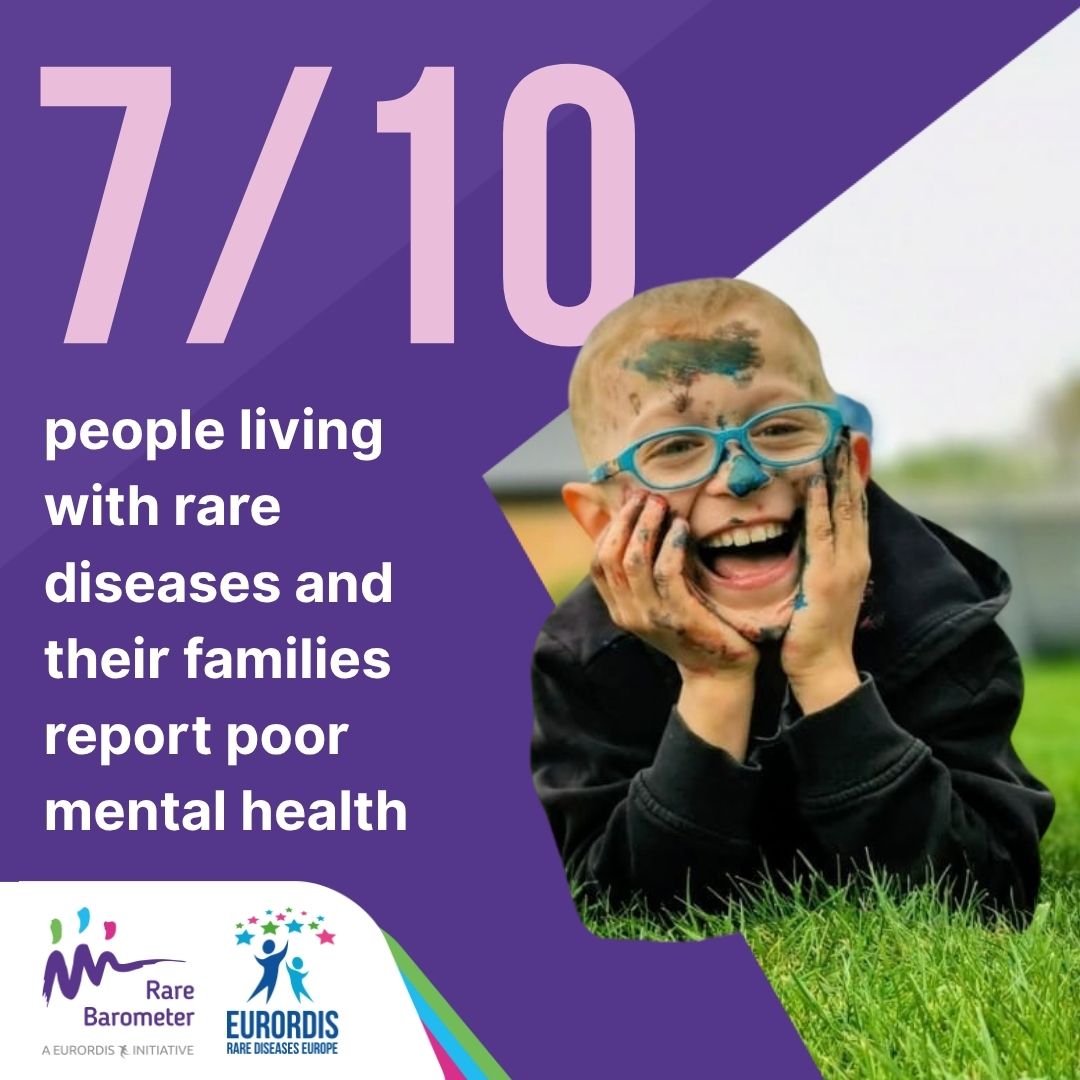
On World Mental Health Day, 10 October, EURO-NMD highlights findings from the EURORDIS Rare Barometer survey on mental health, shedding light on the experiences and support needs of people living with rare neuromuscular diseases and their families.
Conducted between 11 September and 14 December 2025, the survey gathered responses from 604 participants for the EURO-NMD community, representing 27 rare neuromuscular diseases across 33 European countries.
Understanding the mental health impact
68% of participants reported at least one of the four mental health difficulties measured in the survey: depressive symptoms, anxiety symptoms, loneliness or suicidal thoughts.
The results show that:
- 46% reported moderate to severe depressive symptoms.
- 39% reported clinically significant anxiety symptoms.
- 42% reported loneliness.
- 26% reported suicidal thoughts in the previous six months.
Many participants experienced several difficulties: 45% reported at least two of the four difficulties measured.
Gaps in access to psychological support
The survey also highlights unmet support needs. While 68% of respondents reported needing professional psychological support in the previous six months, only 44% reported receiving it.
Alongside professional support, 72% received emotional support from their community, including family, friends, neighbours, charities or patient organisations.
These findings underline the importance of recognising mental health needs within neuromuscular care and improving access to emotional and psychological support for people living with rare diseases and their families.
Raising awareness together
EURO-NMD joins EURORDIS and Rare Barometer in bringing these findings to a wider audience for World Mental Health Day.
We thank everyone who contributed to the survey and helped make the experiences of the rare neuromuscular disease community more visible.
Source: EURORDIS Rare Barometer, EURO-NMD mental health factsheet, June 2026. These findings describe the survey respondents. Participation was self-selected, and the representativeness of the sample cannot be assessed.