|
|
| |
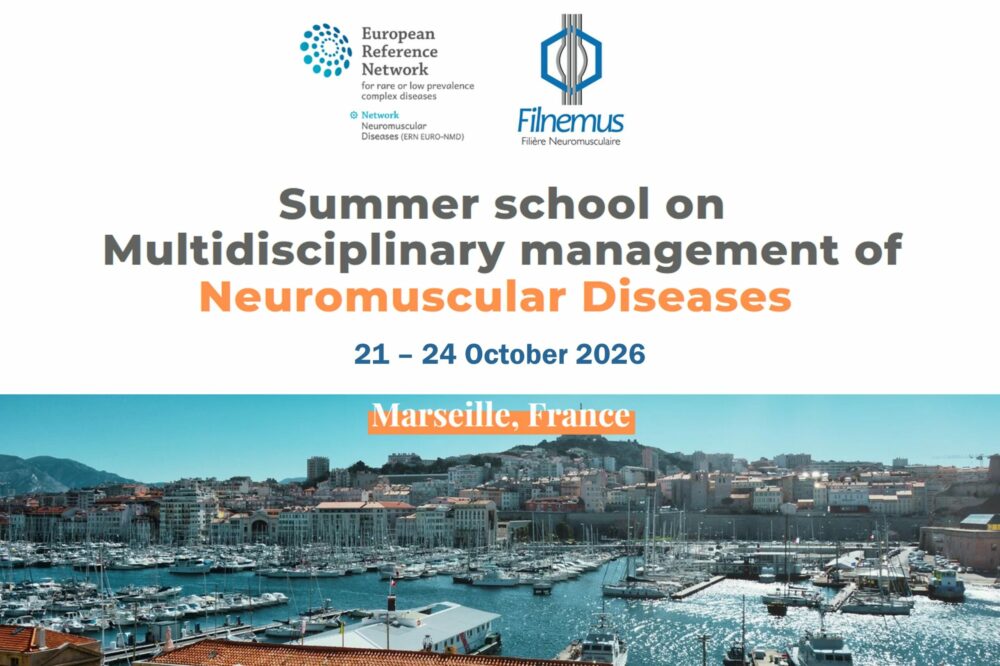
ERN EURO-NMD and FILNEMUS are pleased to announce the third edition of the Summer School on Multidisciplinary Management of Neuromuscular Diseases, taking place in Marseille, France, from 21–24 October 2026. This interactive programme will combine lectures, clinical cases, practical sessions and group work, with a focus on the multidisciplinary care of people living with neuromuscular diseases. Topics include rehabilitation, respiratory and cardiac care, psychological support, palliative care, pregnancy, and quality of life. LAST DAYS FOR PRE-REGISTRATION !
|
|
|
|
|
|
|
| |
Learn how to use the Clinical Patient Management System (CPMS), the secure European platform that allows specialists across the Euro-NMD ERN to collaborate on complex rare disease cases. These short training sessions will help you navigate the system, create and manage panels, and share patient information safely and efficiently.
Make the most of the CPMS to strengthen collaboration and improve care for people with rare diseases.
You will find the dates for the upcoming 2026 online training sessions below: Wednesday, July 1 at 17:00 CET 11th CPMS Training: 11th CPMS Training 1/7 17.00 CEST | Partecipazione alla riunione | Microsoft Teams Tuesday, July 14 at 17:00 CET 12th CPMS Training: 12th CPMS Training 14/7 17.00 CEST | Partecipazione alla riunione | Microsoft Teams
|
|
|
|
|
|
| |
Healthcare professionals involved in the care of patients with neuromuscular disorders are invited to participate in a survey exploring current perspectives on scapulothoracic arthrodesis (STA) in Facioscapulohumeral Muscular Dystrophy (FSHD). The survey aims to better understand current knowledge, awareness, and clinical practices related to STA. The findings will help identify areas where additional guidance, education, or research may be needed, ultimately supporting improved clinical decision-making and patient care. The survey consists of 7 sections and takes approximately 10 minutes to complete. Your expertise and experience are highly valued, and we encourage you to take part. Survey: https://koc.ca1.qualtrics.com/jfe/form/SV_5tEJQDKzzKbYvnU
For any questions regarding the survey, please contact Dr. Piraye Oflazer at poflazer@ku.edu.tr.
|
|
|
|
|
|
| |
Healthcare professionals involved in the care of patients with neuromuscular disorders are invited to participate in a survey exploring current perspectives on scapulothoracic arthrodesis (STA) in Facioscapulohumeral Muscular Dystrophy (FSHD). The survey aims to better understand current knowledge, awareness, and clinical practices related to STA. The findings will help identify areas where additional guidance, education, or research may be needed, ultimately supporting improved clinical decision-making and patient care. The survey consists of 7 sections and takes approximately 10 minutes to complete. Your expertise and experience are highly valued, and we encourage you to take part. Survey: https://koc.ca1.qualtrics.com/jfe/form/SV_5tEJQDKzzKbYvnU
For any questions regarding the survey, please contact Dr. Piraye Oflazer at poflazer@ku.edu.tr.
|
|
|
|
|
| |
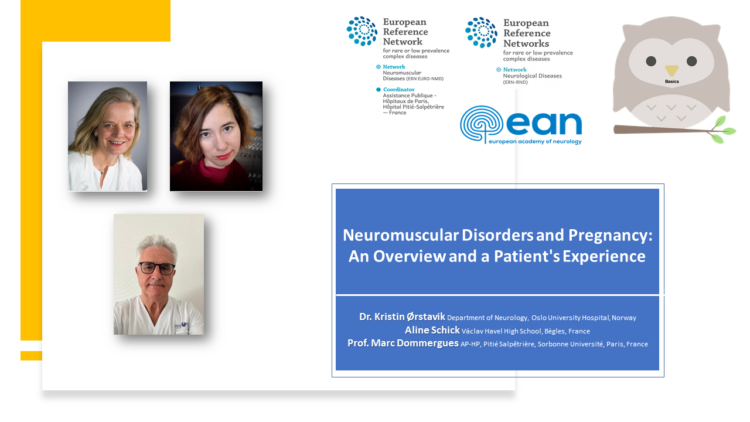
Next EURO-NMD webinar:
Neuromuscular Disorders and Pregnancy: An Overview and a Patient’s Experience
Date: Thursday 02 July 2026, 16:00 CEST
Speaker: Dr. Kristin Ørstavik (Department of Neurology, Oslo University Hospital, Norway), Aline Schick (Václav Havel High School, Bègles, France) & Prof. Marc Dommergues (AP-HP, Pitié Salpêtrière, Sorbonne Université, Paris, France) Click here to register!
|
|
|
|
| |
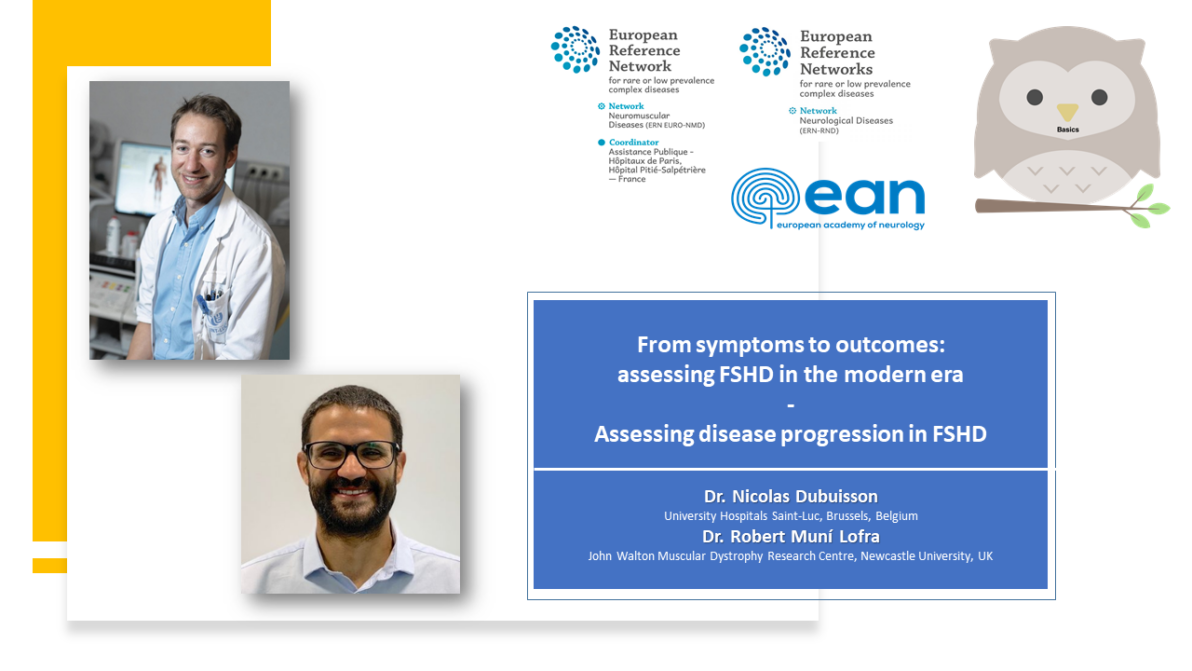
Then, coming up: Date: Thursday 16 July 2026, 17:00 CEST
Speaker: Dr. Nicolas Dubuisson (University Hospitals Saint-Luc, Brussels, Belgium) & Dr. Robert Muní Lofra (John Walton Muscular Dystrophy Research Centre, Newcastle University, UK)
Moderator: Dr. Enrico Bugiardini University College London, UK
Click here to register!
|
|
|
|
| |
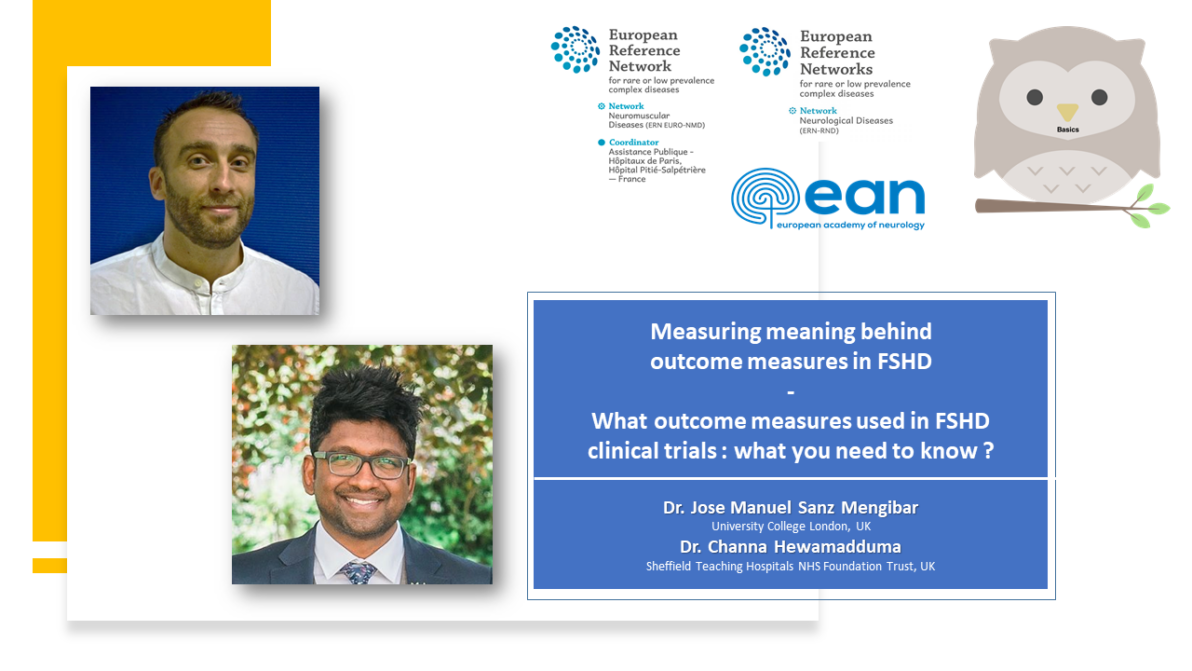
Date: Thursday 23 July 2026, 17:00 CEST
Speaker: Dr. Jose Manuel Sanz Mengibar (University College London, UK) & Dr. Channa Hewamadduma (Sheffield Teaching Hospitals NHS Foundation Trust, UK)
Moderator: Dr. Enrico Bugiardini (University College London, UK)
Click here to register!
|
|
|
|
|
| |
If you missed a webinar, don't panic! All our webinars are recorded and made available on our website. |
|
|
| |
EURORDIS Patient Partnership Webinar Series Transition in Healthcare: Turning recommendations into practice
EURORDIS is organising a two-part webinar series on Transition in Healthcare: Turning Recommendations into Practice, taking place online on 30 June and 1 July 2026. The webinars will explore how recommendations on healthcare transitions, particularly from paediatric to adult care, are being implemented across Europe, with a strong focus on patient partnership and practical solutions developed within the European Reference Networks. The series will bring together healthcare professionals, patient representatives, and ERN experts to share experiences, tools, and innovative initiatives supporting effective transitions in care.
|
|
|
|
| |
Facioscapulohumeral muscular dystrophy (FSHD) is a neuromuscular disorder characterized by marked clinical and molecular heterogeneity. Over more than two decades, molecular diagnosis has relied on Southern blotting to resolve the complex D4Z4 macrosatellite at chromosome 4q35.
While this approach remains a reference standard, its technical constraints and the need for complementary layers of information have become more evident as FSHD diagnostics is increasingly required to support patient stratification, genotype-phenotype correlation, and clinical trial readiness.
Journal: Neuromuscular Disorders Special Issue: Facioscapulohumeral Muscular Dystrophy (FSHD) Publication date: 15 April 2026 Reference: Volume 63, Special Issue on Facioscapulohumeral Muscular Dystrophy (FSHD), Article 106434. DOI: https://doi.org/10.1016/j.nmd.2026.106434
|
|
|
|
| |
Respiratory involvement in facioscapulohumeral muscular dystrophy is a clinically relevant yet frequently underdiagnosed. Manifestations range from subclinical restrictive ventilatory impairment to sleep-disordered breathing and nocturnal hypoventilation, and contribute to reduced quality of life as well as increased morbidity and mortality.
Restrictive patterns occur in approximately 10–45 % of patients and are primarily associated with early disease onset, greater clinical severity, spinal deformities, and loss of ambulation. Pathophysiology is multifactorial, involving respiratory muscle weakness, reduced chest wall compliance, upper airway instability, and sleep-related reductions in ventilatory drive. Importantly, sleep-disordered breathing may arise independently of overall motor impairment and can represent the earliest clinically relevant manifestation.
Journal: Neuromuscular Disorders Publication details: Volume 63, June 2026, Article 106419. Timeline: Received 9 February 2026 • Revised 25 March 2026 • Accepted 26 March 2026 • Available online 27 March 2026 • Version of Record published 13 April 2026. DOI: https://doi.org/10.1016/j.nmd.2026.106419
|
|
|
|
| |
Background: Although individual rare and complex diseases (RDs) affect small patient populations, together they impact an estimated 27–36 million people across the European Union.
Addressing this major public health challenge has been a long-term priority for the European Union, leading to the establishment of the European Reference Networks (ERNs) in 2017. Main body: ERNs are cross-border networks connecting clinical expert centres to share knowledge, improve and harmonise diagnosis and care for patients with rare and complex diseases. Since their inception, 24 ERNs have united 1,606 expert centres across 375 hospitals in all EU Member States and Norway.
Their activities span multidisciplinary clinical collaboration, patient-centred governance, education and training, and the development of clinical guidelines. Over 4900 extremely rare or difficult cases have been discussed among experts without requiring the patients to travel abroad when expertise was not available in their own countries.
Journal: Orphanet Journal of Rare Diseases (OJRD) Publication details: Volume 21, Article 149 (2026). Publication date: 14 April 2026. Article type: Review article (Open Access). DOI: https://doi.org/10.1186/s13023-026-04341-2
|
|
|
|
| |
07–11 July 2026 | Florence, Italy
EURO-NMD is pleased to highlight the 19th International Congress on Neuromuscular Diseases (ICNMD 2026), taking place from 7–11 July 2026 in Florence, Italy. Recognised as one of the leading international events in the field, ICNMD brings together clinicians, researchers, healthcare professionals, patient representatives, and industry partners to share the latest advances in neuromuscular diseases. The scientific programme will include keynote lectures, scientific sessions, teaching courses, workshops, oral and poster presentations, as well as industry-supported symposia and exhibitions. EURO-NMD will also be present as a non-profit exhibitor at Booth #256 and looks forward to meeting participants throughout the congress.
|
|
|
|
| |
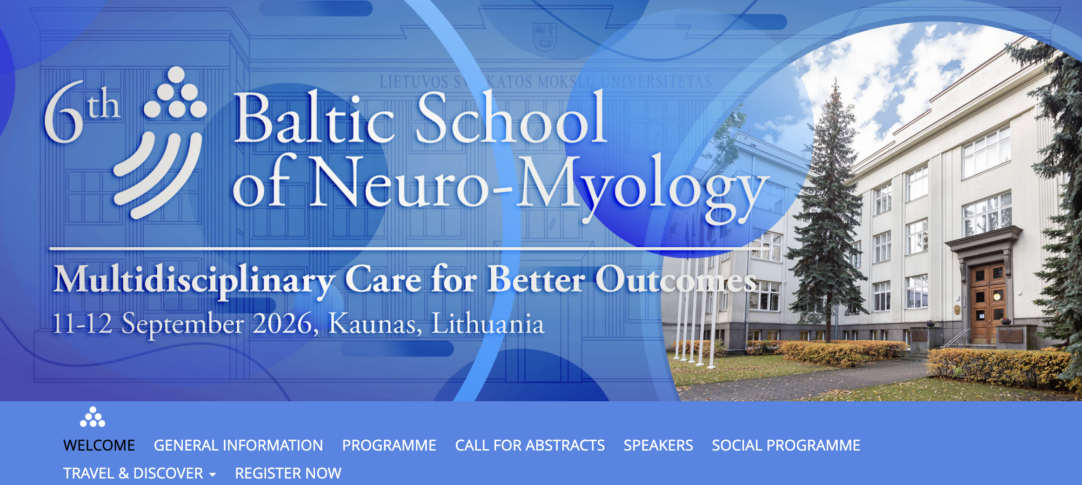
The 6th Baltic School of Neuro-Myology will take place 11–12 September 2026 in Kaunas, Lithuania, as an in-person meeting. This year's programme will focus on improving multidisciplinary care for neuromuscular diseases, offering sessions relevant to a wide range of healthcare professionals, including neurologists, paediatric neurologists, pulmonologists, cardiologists, physiotherapists, rehabilitation physicians, orthopaedic specialists, and other clinicians involved in neuromuscular care. The primary target audience is neurologists and paediatric neurologists specialising in neuromuscular diseases. The meeting is organised by: - Hospital of Lithuanian University of Health Sciences Kaunas Clinics
- Lithuanian University of Health Sciences
- Lithuanian Neurological Society
- Lithuanian Society of Clinical Neurophysiology and Neurosonology
Programme: https://reg.eventas.lt/website/19639/programme/
|
|
|
|
| |
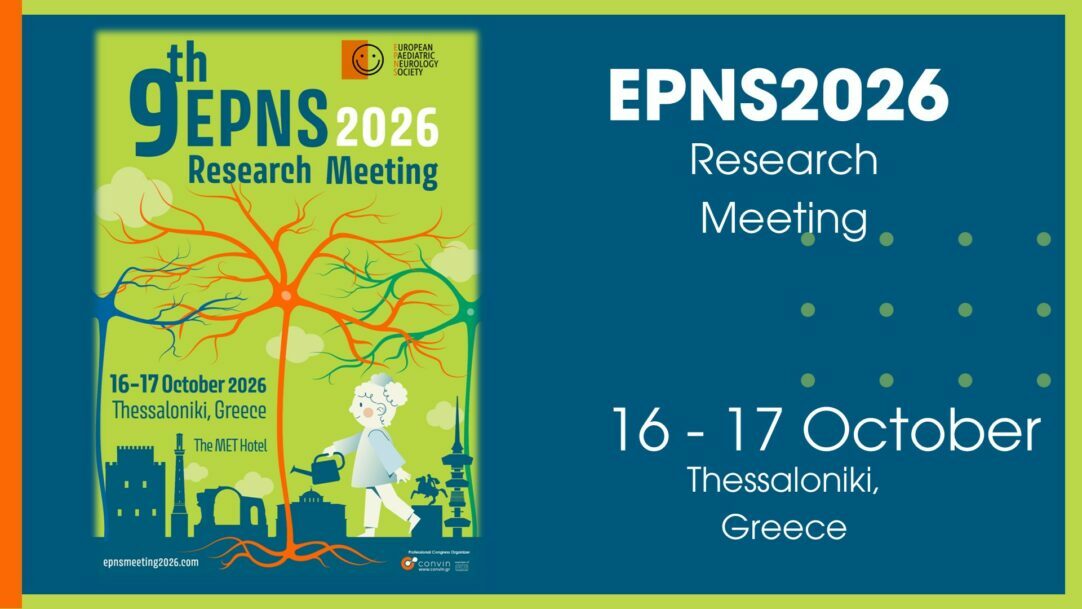
Since 2008, the EPNS Research Meeting has brought together leaders, researchers, and young fellows in Paediatric Neurology to present work, exchange ideas, and foster networking and collaborative projects across Europe and beyond. Who can attend?
Child neurologist researchers at all career stages – senior colleagues, junior scientists, and PhD students – are welcome. Important: All participants must be EPNS members with a 2026 membership. Reduced fees are available for trainees, neuroscientists, and PhD students. For membership info, contact info@epns.info or visit EPNS Membership Fees. Don’t miss this opportunity to showcase your research and connect with the paediatric neurology community!
Dates: 16 – 17 Oct 2026 Location: Greece
|
|
|
|
| |
Launch of the 2026 Call for Affiliated Partners The Board of Member States (BOMS), meeting in Rome in 2025, endorsed the launch of a new Call for Affiliated Partners within the European Reference Networks (ERNs), marking an important step in strengthening collaboration across the ERN community. For ERN EURO-NMD, the call is open to three eligible countries currently not represented in the network: Croatia, Romania and Slovakia. Launched on 13 April 2026, the call will remain open for applications until 1 September 2026, with final endorsement expected in March 2027. The initiative aims to welcome new Affiliated Partners, further strengthen European cooperation in rare neuromuscular diseases, and expand the reach and impact of ERN EURO-NMD.
|
|
|
|
| |
The NeuroMuscular Centre at The Ottawa Hospital, affiliated with the University of Ottawa, is expanding its team and is currently recruiting two Neuromuscular Neurologists to join its growing program: - Clinician-Investigator (Neuromuscular)
- Clinician-Scientist (Tier 2 Canada Research Chair in Neuromuscular Disease, with salary support)
The NeuroMuscular Centre offers a highly collaborative and academically stimulating environment dedicated to excellence in patient care, research, and education. Successful candidates will have the opportunity to contribute to innovative clinical and translational research programs within a leading tertiary academic centre.
The Ottawa Hospital provides strong institutional support for investigator-led research and clinical trials, making these positions particularly attractive for clinicians seeking to further develop their academic careers in neuromuscular diseases.
|
|
|
|