|
|
| |
Dear EURO-NMD Community, We would like to apologise for the delay in publishing this newsletter due to technical issues. Thank you for your patience and understanding. We hope you enjoy this month's updates from across the EURO-NMD network. The EURO-NMD Coordination Team
|
|
|
|
|
|
|
| |
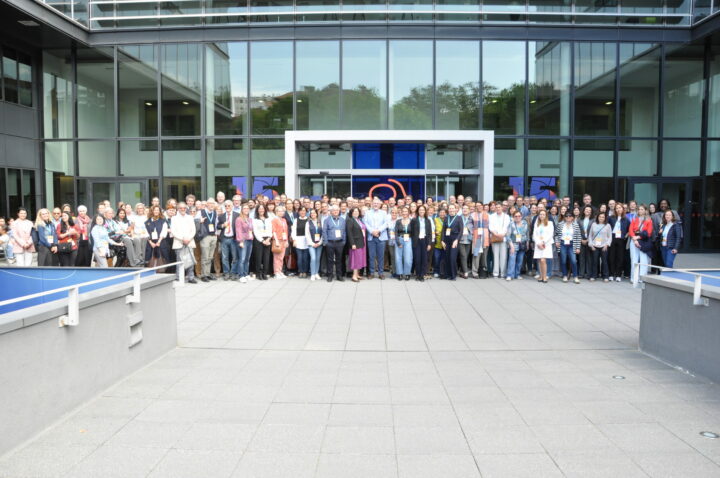
The 9th ERN EURO-NMD Annual Meeting took place in Paris from 27–29 April 2026, bringing together more than 200 participants from across Europe and beyond. Over three days, clinicians, researchers, healthcare professionals, patient representatives, and partners gathered to exchange knowledge, discuss ongoing initiatives, and strengthen collaboration within the neuromuscular community. A particular highlight of this year's meeting was the Satellite Symposium, which generated lively discussions and showcased key advances in the field. The programme also featured Working Group sessions, scientific presentations, patient-focused initiatives, and valuable networking opportunities, fostering new collaborations and ideas. We would like to warmly thank all speakers, moderators, participants, and organisers whose dedication and enthusiasm contributed to the success of this event. A first look ahead to 2027: Building on the success of this year's meeting, we are pleased to share an exciting preview of what's to come. In 2027, three European Reference Networks, EpiCARE, ERN-RND and ERN EURO-NMD, will join forces to organise a common Cross-ERN Conference.
Stay tuned!
|
|
|
|
|
|
|
| |
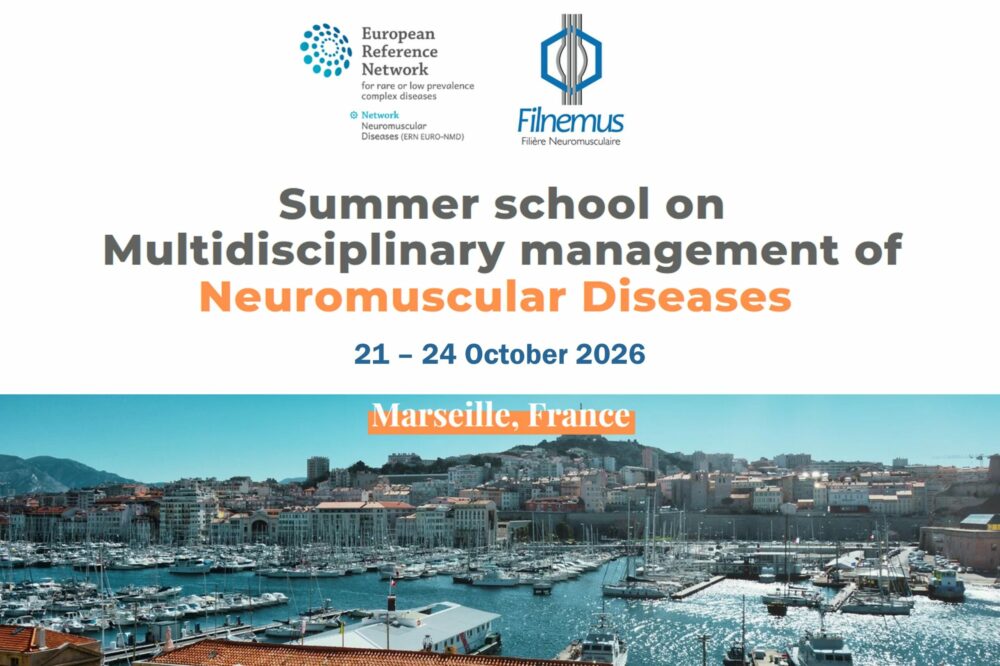
ERN EURO-NMD and FILNEMUS are pleased to announce the third edition of the Summer School on Multidisciplinary Management of Neuromuscular Diseases, taking place in Marseille, France, from 21–24 October 2026. This interactive programme will combine lectures, clinical cases, practical sessions and group work, with a focus on the multidisciplinary care of people living with neuromuscular diseases. Topics include rehabilitation, respiratory and cardiac care, psychological support, palliative care, pregnancy, and quality of life. Applications are open until 30 June 2026.
|
|
|
|
|
|
|
| |
Join us on 9 June 2026 at 18:00 CEST for the Fifth CPMS Day, dedicated to Neuromuscular Imaging. Moderated by Pierre Carlier and Giorgio Tasca, this interactive session will focus on the discussion of complex imaging cases within the CPMS platform, offering clinicians the opportunity to receive expert feedback and exchange experience with peers across Europe. Clinicians are invited to submit cases for presentation and discussion ahead of the event.
|
|
|
|
|
|
|
| |
The EURO-NMD Academy is pleased to offer the Mitochondrial Disorders Course, accredited by the European Accreditation Council for Continuing Medical Education (EACCME®). Developed in collaboration with EURO-NMD, ERN-RND (Rare Neurological Disorders), and ERN EpiCARE (Rare and Complex Epilepsies), this expert-led course addresses key gaps in postgraduate education by providing a comprehensive and multidisciplinary overview of mitochondrial diseases. Spanning 11 modules, it covers essential topics such as genetics, clinical presentation, diagnosis, and emerging therapies. Designed for healthcare professionals across specialties, the course offers flexible, self-paced learning with an estimated workload of 20 hours. Participants who complete the course successfully can obtain CME credits and a certificate. Enrol now via the EURO-NMD Academy platform: https://euronmd.lilicampus.com/
Stay up to date with the latest advances in neuromuscular disorders through EURO-NMD Academy.
|
|
|
|
|
|
|
| |
Learn how to use the Clinical Patient Management System (CPMS), the secure European platform that allows specialists across the Euro-NMD ERN to collaborate on complex rare disease cases. These short training sessions will help you navigate the system, create and manage panels, and share patient information safely and efficiently.
Make the most of the CPMS to strengthen collaboration and improve care for people with rare diseases.
Register here!
|
|
|
|
|
|
| |
EURO-NMD is pleased to announce a new Neuropathology Webinar Series. This series brings together leading experts from different countries who will share their knowledge and experience in the field of neuropathology. The webinars will focus on important topics such as nerve and skin biopsies, explaining how these techniques are used to better understand and diagnose neuromuscular diseases. Throughout the series, participants will learn about both basic and more advanced methods. The speakers will explain step by step how biopsies are performed, how samples are analysed in the laboratory, and how the results help doctors make accurate diagnoses. The sessions will also introduce modern technologies and new approaches that are improving patient care.
Dates: April – June 2026
Time: 16:00–17:00 (CEST)
Format: Online & Free webinars
|
|
|
|
|
| |
Next EURO-NMD webinar:
Date: Thursday, 04 June 2026, 16:00 CEST
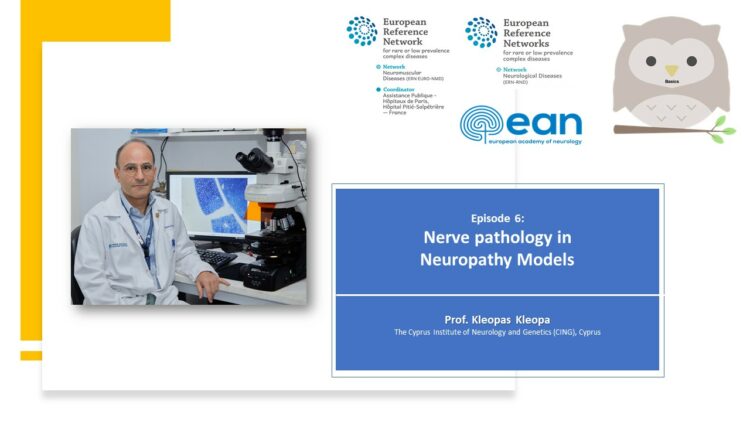
Speaker: Prof. Kleopas Kleopa (Cyprus Institute of Neurology and Genetics (CING))
Moderator: Prof. Edoardo Malfatti (AP-HP, Hôpital Henri Mondor, Créteil, France)
Content: Quantitative pathology and outcome measures in experimental models
Click here to register!
|
|
|
|
| |
Then, coming up: Date: Thursday 11 June 2026, 16:00 CEST
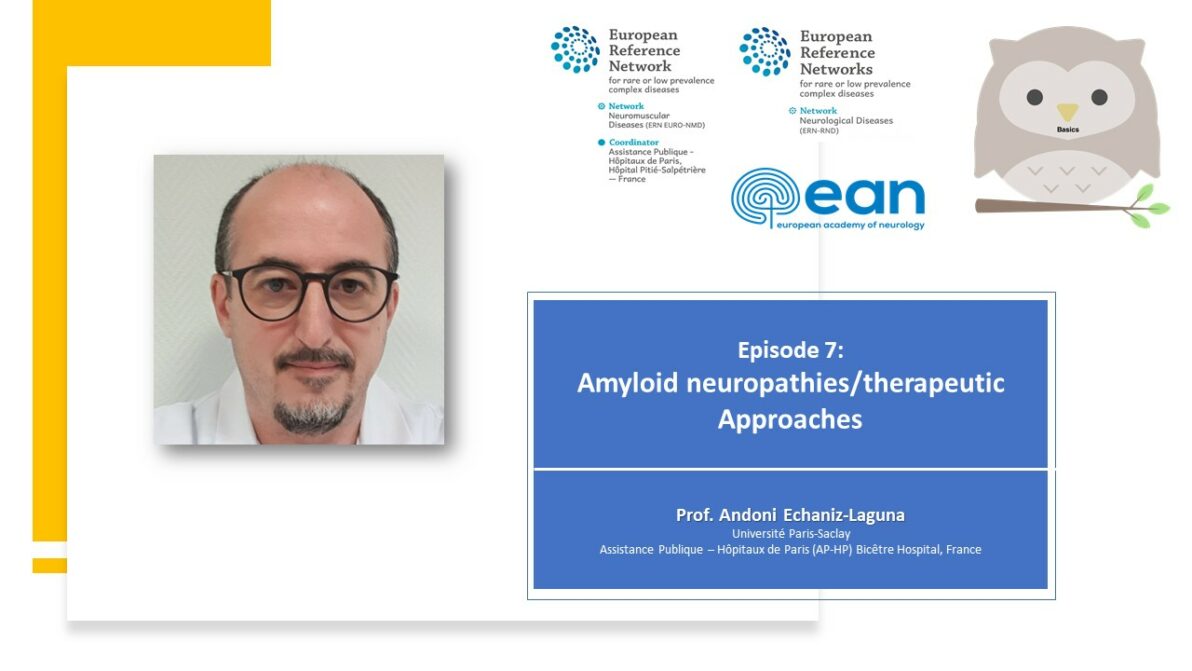
Speaker: Prof. Andoni Echaniz-Laguna (Université Paris-Saclay – Assistance Publique – Hôpitaux de Paris (AP-HP) Bicêtre Hospital)
Moderator: Dr. Clovis Adam (AP-HP, Bicêtre Hospital, France)
Content: Latest advances in therapeutic strategies for hereditary and acquired amyloid neuropathiesQuantitative pathology and outcome measures in experimental models
Click here to register!
|
|
|
|
|
| |
If you missed a webinar, don't panic! All our webinars are recorded and made available on our website. |
|
|
| |
16 June 2026 | 3 – 4 pm CEST
“Neuro-ophthalmological presentations of rare neurometabolic diseases”
Zoom Registration Spaeker: Kathrin Reetz
RWTH-University Hospital Aachen, Germany 23 June 2026 | 3 – 4 pm CEST
“Palliative Care in Adult Patients with Neuromuscular and other Rare Neurological Disorders”
Zoom Registration
Speaker: Marianne de Visser
Amsterdam University Medical Center, The Netherlands
30 June 2026 | 3 – 4 pm CEST
“Friedreich Ataxia”
Zoom Registration
Spaeker: Kathrin Reetz
RWTH-University Hospital Aachen, Germany
|
|
|
|
| |
EURORDIS Patient Partnership Webinar Series Transition in Healthcare: Turning recommendations into practice
EURORDIS is organising a two-part webinar series on Transition in Healthcare: Turning Recommendations into Practice, taking place online on 30 June and 1 July 2026. The webinars will explore how recommendations on healthcare transitions, particularly from paediatric to adult care, are being implemented across Europe, with a strong focus on patient partnership and practical solutions developed within the European Reference Networks. The series will bring together healthcare professionals, patient representatives, and ERN experts to share experiences, tools, and innovative initiatives supporting effective transitions in care.
|
|
|
|
| |
Facioscapulohumeral muscular dystrophy (FSHD) is a neuromuscular disorder characterized by marked clinical and molecular heterogeneity. Over more than two decades, molecular diagnosis has relied on Southern blotting to resolve the complex D4Z4 macrosatellite at chromosome 4q35.
While this approach remains a reference standard, its technical constraints and the need for complementary layers of information have become more evident as FSHD diagnostics is increasingly required to support patient stratification, genotype-phenotype correlation, and clinical trial readiness.
Journal: Neuromuscular Disorders Special Issue: Facioscapulohumeral Muscular Dystrophy (FSHD) Publication date: 15 April 2026 Reference: Volume 63, Special Issue on Facioscapulohumeral Muscular Dystrophy (FSHD), Article 106434. DOI: https://doi.org/10.1016/j.nmd.2026.106434
|
|
|
|
| |
Respiratory involvement in facioscapulohumeral muscular dystrophy is a clinically relevant yet frequently underdiagnosed. Manifestations range from subclinical restrictive ventilatory impairment to sleep-disordered breathing and nocturnal hypoventilation, and contribute to reduced quality of life as well as increased morbidity and mortality.
Restrictive patterns occur in approximately 10–45 % of patients and are primarily associated with early disease onset, greater clinical severity, spinal deformities, and loss of ambulation. Pathophysiology is multifactorial, involving respiratory muscle weakness, reduced chest wall compliance, upper airway instability, and sleep-related reductions in ventilatory drive. Importantly, sleep-disordered breathing may arise independently of overall motor impairment and can represent the earliest clinically relevant manifestation.
Journal: Neuromuscular Disorders Publication details: Volume 63, June 2026, Article 106419. Timeline: Received 9 February 2026 • Revised 25 March 2026 • Accepted 26 March 2026 • Available online 27 March 2026 • Version of Record published 13 April 2026. DOI: https://doi.org/10.1016/j.nmd.2026.106419
|
|
|
|
| |
Background: Although individual rare and complex diseases (RDs) affect small patient populations, together they impact an estimated 27–36 million people across the European Union.
Addressing this major public health challenge has been a long-term priority for the European Union, leading to the establishment of the European Reference Networks (ERNs) in 2017. Main body: ERNs are cross-border networks connecting clinical expert centres to share knowledge, improve and harmonise diagnosis and care for patients with rare and complex diseases. Since their inception, 24 ERNs have united 1,606 expert centres across 375 hospitals in all EU Member States and Norway.
Their activities span multidisciplinary clinical collaboration, patient-centred governance, education and training, and the development of clinical guidelines. Over 4900 extremely rare or difficult cases have been discussed among experts without requiring the patients to travel abroad when expertise was not available in their own countries.
Journal: Orphanet Journal of Rare Diseases (OJRD) Publication details: Volume 21, Article 149 (2026). Publication date: 14 April 2026. Article type: Review article (Open Access). DOI: https://doi.org/10.1186/s13023-026-04341-2
|
|
|
|
| |
06 June 2026 | World COL6 Myopathy Day 2026 We are pleased to invite you to take part in the 2nd World COL6 Myopathy Day, which will be held on 6 June 2026 as an international online scientific meeting. This event will bring together clinicians, researchers, and patient representatives from around the world to share the latest advances in: - Clinical management
- Basic research
- Emerging therapeutic approaches
You are warmly invited to pre-register here:
https://col6.world/applicationform By pre-registering, you will receive updates on the programme, invited speakers, and access details as the event approaches.
|
|
|
|
| |
13–16 June 2026 | Sweden
The European Society of Human Genetics (ESHG) Conference brings together professionals from across the field of genetics, including researchers, clinicians, laboratory specialists, public health experts, ethicists, and policymakers from Europe and beyond. The 2026 edition will be held in a hybrid format, allowing participants to attend either in person or online. The programme will feature leading speakers, cutting-edge research, and numerous networking opportunities. EURO-NMD will be present at the conference with a joint Inter-ERN booth alongside ERN-EYE, GENTURIS and MetabERN. We look forward to meeting attendees and showcasing the work of the European Reference Networks in rare diseases.
|
|
|
|
| |
27–30 June 2026 | Switzerland Join us for the 12th EAN Congress in the vibrant city of Geneva! Under the overarching theme “Brains, Bytes & Beyond: Tech in Neurology”, the congress will explore how technological innovation and artificial intelligence are transforming the field of neurology – from restorative therapies to clinical reasoning and decision-making. Set against the stunning backdrop of Lake Geneva and the Alps, this international meeting will bring together leading experts and professionals to share knowledge, discuss challenges, and shape the future of neurology. Don’t miss this unique opportunity to connect, learn, and experience Geneva’s rich culture and breathtaking scenery.
|
|
|
|
| |
07–11 July 2026 | Florence, Italy
EURO-NMD is pleased to highlight the 19th International Congress on Neuromuscular Diseases (ICNMD 2026), taking place from 7–11 July 2026 in Florence, Italy. Recognised as one of the leading international events in the field, ICNMD brings together clinicians, researchers, healthcare professionals, patient representatives, and industry partners to share the latest advances in neuromuscular diseases. The scientific programme will include keynote lectures, scientific sessions, teaching courses, workshops, oral and poster presentations, as well as industry-supported symposia and exhibitions. EURO-NMD will also be present as a non-profit exhibitor at Booth #256 and looks forward to meeting participants throughout the congress.
|
|
|
|
| |
Launch of the 2026 Call for Affiliated Partners The Board of Member States (BOMS), meeting in Rome in 2025, endorsed the launch of a new Call for Affiliated Partners within the European Reference Networks (ERNs), marking an important step in strengthening collaboration across the ERN community. For ERN EURO-NMD, the call is open to three eligible countries currently not represented in the network: Croatia, Romania and Slovakia. Launched on 13 April 2026, the call will remain open for applications until 1 September 2026, with final endorsement expected in March 2027. The initiative aims to welcome new Affiliated Partners, further strengthen European cooperation in rare neuromuscular diseases, and expand the reach and impact of ERN EURO-NMD.
|
|
|
|
| |
A public consultation is currently open on the proposed Guidelines 1/2026 on Processing of Personal Data for Scientific Research Purposes, with feedback accepted until 25 June 2026. The guidelines reaffirm key GDPR principles for research while clarifying the conditions under which certain derogations may apply, potentially facilitating access to research data within specific frameworks such as the European Health Data Space (EHDS). Researchers, healthcare professionals, patient organisations, and other stakeholders are encouraged to review the draft guidelines and contribute to the consultation.
|
|
|
|